
Verdict: One AI generation buys you 5 to 8 seconds. Our test clips say that fits one story shape: a setup read in the first second, ONE action, and a pay-off held to the end. Ask for a fourth beat and the model will not refuse — it quietly drops or fudges the middle instead.
Based on: Four hands-on generations, October 31 – November 1, 2026. Lengths measured from the downloads: 7.93 seconds (both Flow clips), 5.04 (Kling, PixVerse). A small sample, honestly labelled.
An AI Short is not a scene; it is a single clip with a hard ceiling. We ran one four-beat prompt — a cow reaches over a fence, steals a farmer's hat, he reacts, she trots away wearing it — through the tools in our 7-tool free-tier test, and every finished clip landed between five and eight seconds. The scores are in the same Short made in five tools. This is about the clock, and the story shape that survives it.
Four beats, three clocks
Google Flow (Veo 3.1 Fast) — 7.93 seconds, and the middle still went missing. Flow's frames look like the whole story: at 0.5 seconds the cow noses the hat brim; at 5.5 she trots across the field wearing it. But watch the join around 3 seconds: a hat-like shape is airborne while the farmer still appears to be wearing his. The hat never actually leaves the farmer's head: the steal — the one action the story is about — is simply not there.
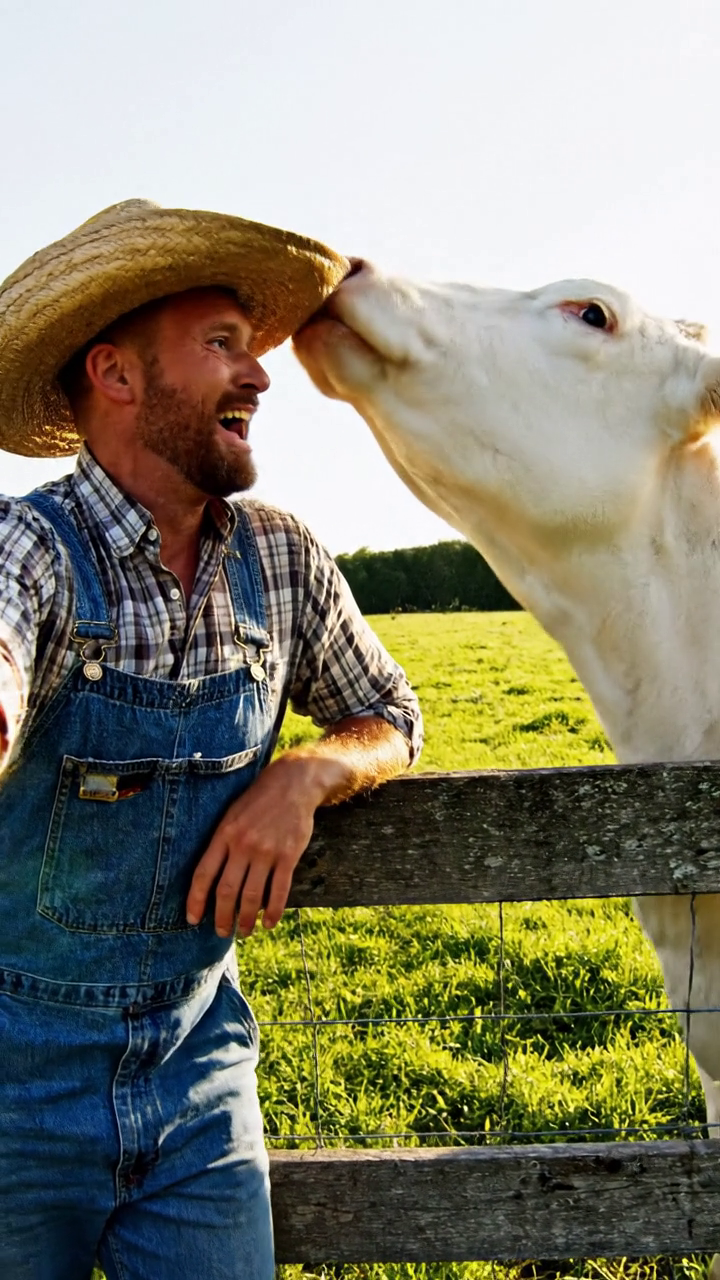
Kling AI (Kling 4.0) — 5.04 seconds, all four beats, one of them a blink. Kling told the most complete story: in its 2.5-second frame the farmer is already hatless, hand on his head, laughing, the hat already on the cow behind the fence, and by 4.7 seconds the cow is trotting away in it. But do the division: four beats in five seconds leaves the grab a fraction of a second — so fast that in the middle frame the hat sits awkwardly behind the cow's horns. The story survived; the action barely had room to.
PixVerse (V6) — 5.04 seconds, the outline of a story. The 0.5-second frame is a clean setup — cow at the fence, nosing the hat brim — and by 4.8 seconds the cow is wearing the hat, tongue out. In between, the steal is a morph, not a grab; the farmer vanishes from the later frames, and a bucket that was never in the prompt appears. First and last beats: perfectly legible. The middle is a transition wearing a story's clothes.
Three tools, two clip lengths, one pattern: the end state was easier for every model than the action. What got skipped, rushed or morphed was always the middle, where the event lives.
The control case: one action, no casualties
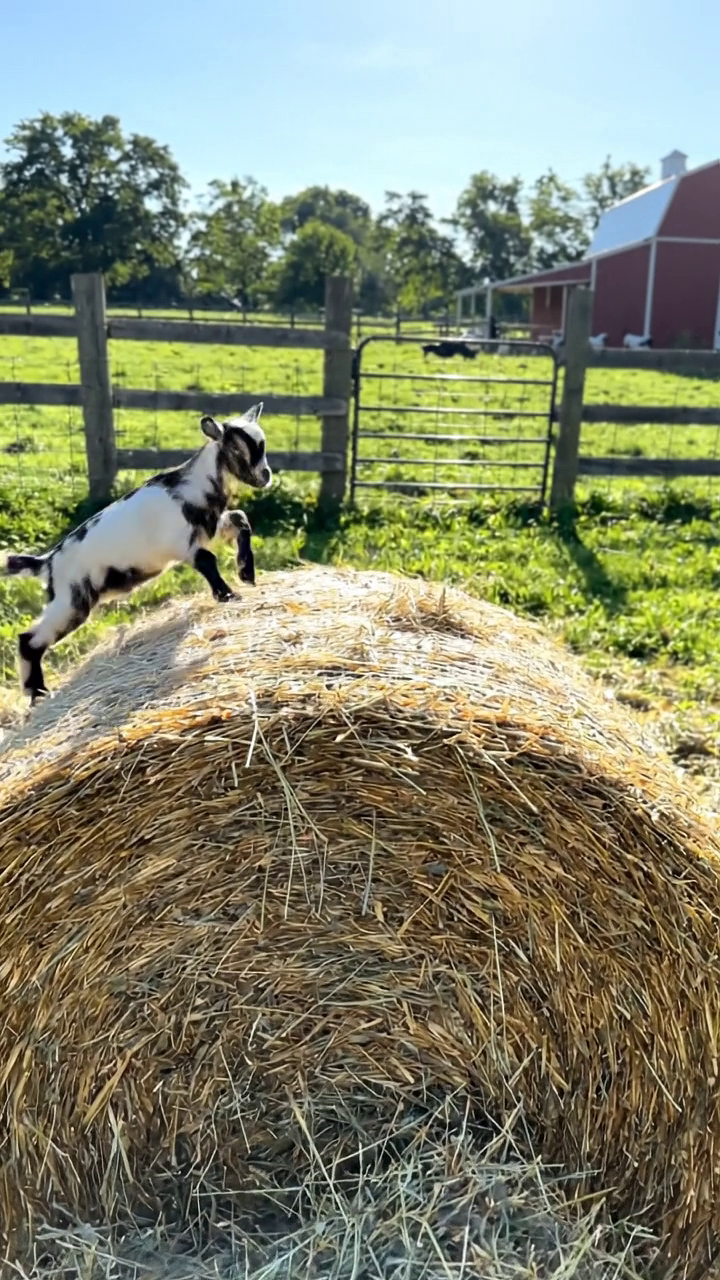
Our fourth generation was the control. In Veo 3.1 Lite we asked for much less: a baby goat hops onto a hay bale, tumbles into the loose hay and pops its head up at the camera. Same length as the Fast clip, 7.93 seconds — and it followed the prompt closely. The difference is the shape of the ask: one subject, and a single continuous movement whose ending is built into it. The tumble is the event, and its pay-off — the head popping up — is simply where the movement lands. No second character has to react, and no prop changes owners mid-clip.
The story shape that fits: setup, one action, pay-off
Second 0–1: a setup that reads as a photograph. Every opening frame in our clips is instantly legible — cow, farmer, fence, hat. Write your opening as a photo caption: who, where, and the one object that matters. If the first frame needs explaining, the clip starts in debt it will never repay.
The middle: one action, one verb. Everything between setup and pay-off should be a single movement. In the hat-steal prompt, the steal was beat two of four, and every tool fumbled it: skipped by Flow, morphed by PixVerse, rushed by Kling. If the action is the joke, give it the whole middle.
The final 1–2 seconds: a pay-off that stays on screen. End states are what these models render most reliably — in our looks-fake breakdown, spending prompt words on the final frame was one of the seven fixes, and the timing evidence agrees. Kling's pay-off is not a flash on the last frame: the hat is already on the cow by the 2.5-second frame, so half the clip is the result, held long enough to read. Budget for that.
Cut the reaction — or fold it into the pay-off
The expendable beat is the reaction. Notice where the farmer's laugh survived best: inside Kling's 2.5-second frame, hatless and laughing in the same image that puts the hat on the cow. A reaction is an expression — a state — and states are what these models render well. An action is an event, and events are what they drop. Never spend a separate beat on a reaction. Write it into the pay-off instead: not "then the farmer laughs," but a final frame that contains him already — hatless, laughing, the cow walking away in the hat.
Write the prompt in beat order — and count the verbs
Our test prompt was written in story order — stretches its neck over the fence, steals the hat, then trots away proudly wearing it — and no model will re-order a scrambled story for you. Keep one clause per beat, in screen order, the last clause describing the last frame. Then count the real action verbs. Steals, chases, opens, throws — each is a claim on the middle of your clip. More than one, and you are not writing a clip. You are writing two.
When the story genuinely needs two actions
Some gags really are two events; squeezing them into one prompt just buys a morph. Generate two clips, one action each, and let the edit join them. A cut between clips is a language viewers speak fluently; a morph inside one clip is a lie they can feel. It is how we already plan a week of Shorts from one idea, in the batch workflow: storytelling lives in the sequence of clips, never inside one. Two clips cost twice the credits, so prove each prompt on the cheapest tier first.
Testing note: From our own hands-on generations on October 31 and November 1, 2026 — the identical hat-steal prompt run once each in Google Flow (Veo 3.1 Fast, 20 credits; 7.93 seconds), Kling AI (Kling 4.0, 50 credits; 5.04 seconds) and PixVerse (V6, 38 credits; 5.04 seconds), plus one Veo 3.1 Lite generation (10 credits; 7.93 seconds, the baby-goat clip). Beats checked against frames at the timestamps quoted. No rerolls. Four generations is a small sample: field notes from real clips, not lab results. Credit amounts are as shown on those dates and can change. This post contains no affiliate links.
Comments
Post a Comment